
Posted on 05/10/2026 11:33:24 (7d ago) 84
Before the August 15 governorship election in Osun State, there was a sudden surge in the engagement of armed mercenaries using sticks and groundnuts across the state. This led to several casualties, leaving many dead and others with varying degrees of injuries. What could have caused such a sudden spike in deadly violence?
When the root cause is understood, the cost of the solution becomes minimal. However, the public has chosen self-deception by attributing the crisis entirely to alleged cooperation between the Nigeria Police Force and a specific political party in the race.
More than a month after the governorship election was concluded, the crisis—which many deceptively blamed on election politics and police negligence—has not subsided. Instead, it has grown more severe, turning Osogbo, the Osun State capital, into a banana republic: a state without a sheriff.
During the electioneering campaigns, whenever an attack occurred, the public rushed to accuse the police of taking sides and even firing shots. There were frequent calls for the removal of the then Commissioner of Police, Ibrahim Gotan. One pattern was obvious: every violent incident was politicized by the public, while police accounts consistently linked the attacks to cultism.
Readers may wonder what efforts were made by the police to curb this menace or whether law enforcement simply looked on helplessly. In truth, the police did their best. Without the heavy presence of police and security personnel deployed to Osun State during the election, the campaign period would have been recorded as one of the bloodiest eras in the state's history.
The duty of the police was undermined by public insincerity. The state government was of little help, as the police were expected to target only those perceived to be in opposition. Meanwhile, any law enforcement action against suspected individuals aligned with the government was immediately labeled by the public as intimidation. Today, we are living with the harsh reality we all knew existed but chose to ignore.
A look at the records shows that the recent rise in cultic attacks is not isolated to Osun; it mirrors a broader trend across Nigeria and abroad. The public in Osun failed society by ignoring how the volatile electioneering period was exploited by rivalry-plagued cult groups to settle old scores. Furthermore, these groups gained greater access to tools of destruction—sticks and groundnuts—allegedly supplied by politicians across party lines to bolster their political muscle.
Contrary to popular belief, similar attacks were occurring elsewhere without anyone attributing them to whether or not the perpetrators supported the state government.
What the public failed to realize was that the Osun State governorship election coincided with the internal election cycles of many of these occultic groups across various levels. This overlap created intense internal friction within specific cult families while existing inter-group rivalries remained active.
For instance, consider what happened on September 2 in South Africa. A local chapter of a cult group held its election in August 2026. A winner emerged, but a rival candidate rejected the outcome, declared a splinter group, and claimed leadership of the organization in South Africa. That leadership crisis remains unresolved, fracturing the group from top to bottom.
Furthermore, dynamic police logs across Nigeria reveal that attacks by members of the same cult family were actually more frequent than inter-cult clashes, with hitmen and group leaders being the primary targets. Leadership disputes inherently bring violence, and Osun State was simply unfortunate to have its election fall around the exact same period.
Was everyone killed a cultist? No—assuming so would be a grave mistake. Innocent citizens have been caught in the crossfire. Consider the tragic case of Aiza Nwozu of Okija in Anambra State on August 30. Nwozu was killed by a cult group, but he was not their target. The attackers were after his son, Chinedu, who was being tracked over an issue linked to his uncle. Unable to locate Chinedu, they murdered his innocent father instead.
It is critical to understand that these groups deploy their hitting services for various reasons. While a political gathering for a Senatorial candidate in Cross River State triggered a violent clash between two cult groups in Ikom on September 6, other incidents had non-political motives. On that same day, a man named Elvis was attacked and killed in Lagos by a rival cult group during a robbery operation. Meanwhile, a cult clash on Presidential Road in Enugu on September 2 was linked to a drug debt between members of opposing groups. These groups have multiple triggers for violence, yet the public insists on attributing everything to political conflicts rather than the underlying menace: cultism.
Look also at the events around September 7 in Abakaliki, Ebonyi State, where almost the entire executive council of a cult group fractured, leading to open warfare, betrayals, and targeted hits among members.
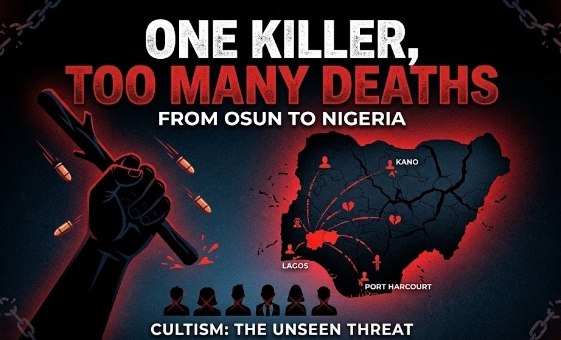
Just a few days ago, another group held its national elections under disputed circumstances. A winner emerged and immediately appointed a full seven-member executive council, displacing rival factions who claimed the process was rigged. Such moves trigger national chain reactions—from Kano to Maiduguri, Gusau to Lagos, Owerri to Abuja, and Ibadan to Port Harcourt—igniting internal purges while perennial inter-group wars continue.
These facts are highlighted to broaden the perspective of the good people of Osun so they can see this threat destroying their society beyond the lens of partisan politics. Citizens are naively enabling an insincere narrative that is costing the lives of their own family members. Self-serving politicians encourage people to view every tragedy through a political lens rather than addressing the real issue head-on.
Cultism is the single underlying cause of the many deaths reported on the streets of Osogbo recently. The state government must wake up to its primary responsibility: protecting the lives and property of its people above political relationships.
If the state government cannot rely solely on the stick to curb this menace, it must deploy the carrot strategy. Authorities should reach out to current members of these groups, educate them, and offer pathways to peace over violence. Empowering these youths with meaningful opportunities will prevent them from being used as instruments of destruction.
Once the Osun State Government acknowledges cultism as the root cause of these deaths, the path toward restoring a peaceful and prosperous Osun will be within reach.
When the root cause is understood, the cost of the solution becomes minimal. However, the public has chosen self-deception by attributing the crisis entirely to alleged cooperation between the Nigeria Police Force and a specific political party in the race.
More than a month after the governorship election was concluded, the crisis—which many deceptively blamed on election politics and police negligence—has not subsided. Instead, it has grown more severe, turning Osogbo, the Osun State capital, into a banana republic: a state without a sheriff.
During the electioneering campaigns, whenever an attack occurred, the public rushed to accuse the police of taking sides and even firing shots. There were frequent calls for the removal of the then Commissioner of Police, Ibrahim Gotan. One pattern was obvious: every violent incident was politicized by the public, while police accounts consistently linked the attacks to cultism.
Readers may wonder what efforts were made by the police to curb this menace or whether law enforcement simply looked on helplessly. In truth, the police did their best. Without the heavy presence of police and security personnel deployed to Osun State during the election, the campaign period would have been recorded as one of the bloodiest eras in the state's history.
The duty of the police was undermined by public insincerity. The state government was of little help, as the police were expected to target only those perceived to be in opposition. Meanwhile, any law enforcement action against suspected individuals aligned with the government was immediately labeled by the public as intimidation. Today, we are living with the harsh reality we all knew existed but chose to ignore.
A look at the records shows that the recent rise in cultic attacks is not isolated to Osun; it mirrors a broader trend across Nigeria and abroad. The public in Osun failed society by ignoring how the volatile electioneering period was exploited by rivalry-plagued cult groups to settle old scores. Furthermore, these groups gained greater access to tools of destruction—sticks and groundnuts—allegedly supplied by politicians across party lines to bolster their political muscle.
Contrary to popular belief, similar attacks were occurring elsewhere without anyone attributing them to whether or not the perpetrators supported the state government.
What the public failed to realize was that the Osun State governorship election coincided with the internal election cycles of many of these occultic groups across various levels. This overlap created intense internal friction within specific cult families while existing inter-group rivalries remained active.
For instance, consider what happened on September 2 in South Africa. A local chapter of a cult group held its election in August 2026. A winner emerged, but a rival candidate rejected the outcome, declared a splinter group, and claimed leadership of the organization in South Africa. That leadership crisis remains unresolved, fracturing the group from top to bottom.
Furthermore, dynamic police logs across Nigeria reveal that attacks by members of the same cult family were actually more frequent than inter-cult clashes, with hitmen and group leaders being the primary targets. Leadership disputes inherently bring violence, and Osun State was simply unfortunate to have its election fall around the exact same period.
Was everyone killed a cultist? No—assuming so would be a grave mistake. Innocent citizens have been caught in the crossfire. Consider the tragic case of Aiza Nwozu of Okija in Anambra State on August 30. Nwozu was killed by a cult group, but he was not their target. The attackers were after his son, Chinedu, who was being tracked over an issue linked to his uncle. Unable to locate Chinedu, they murdered his innocent father instead.
It is critical to understand that these groups deploy their hitting services for various reasons. While a political gathering for a Senatorial candidate in Cross River State triggered a violent clash between two cult groups in Ikom on September 6, other incidents had non-political motives. On that same day, a man named Elvis was attacked and killed in Lagos by a rival cult group during a robbery operation. Meanwhile, a cult clash on Presidential Road in Enugu on September 2 was linked to a drug debt between members of opposing groups. These groups have multiple triggers for violence, yet the public insists on attributing everything to political conflicts rather than the underlying menace: cultism.
Look also at the events around September 7 in Abakaliki, Ebonyi State, where almost the entire executive council of a cult group fractured, leading to open warfare, betrayals, and targeted hits among members.
Just a few days ago, another group held its national elections under disputed circumstances. A winner emerged and immediately appointed a full seven-member executive council, displacing rival factions who claimed the process was rigged. Such moves trigger national chain reactions—from Kano to Maiduguri, Gusau to Lagos, Owerri to Abuja, and Ibadan to Port Harcourt—igniting internal purges while perennial inter-group wars continue.
These facts are highlighted to broaden the perspective of the good people of Osun so they can see this threat destroying their society beyond the lens of partisan politics. Citizens are naively enabling an insincere narrative that is costing the lives of their own family members. Self-serving politicians encourage people to view every tragedy through a political lens rather than addressing the real issue head-on.
Cultism is the single underlying cause of the many deaths reported on the streets of Osogbo recently. The state government must wake up to its primary responsibility: protecting the lives and property of its people above political relationships.
If the state government cannot rely solely on the stick to curb this menace, it must deploy the carrot strategy. Authorities should reach out to current members of these groups, educate them, and offer pathways to peace over violence. Empowering these youths with meaningful opportunities will prevent them from being used as instruments of destruction.
Once the Osun State Government acknowledges cultism as the root cause of these deaths, the path toward restoring a peaceful and prosperous Osun will be within reach.
Discussions (2)
Log in to comment
Or create an account
Disclaimer: Opinion Grid is not responsible for the consequence of any comment you submitted and the system may remove your comment if it violates our policy or infringes on others' rights.
Trending Discussions
From Inbox: US Relocation or N750k New Offer with Conditions and Benefits in Nigeria?
If your purpose for relocating to the US is the usual pursuit of greener pastures, remember the Yoruba adage: what you are traveling to Sokoto to find is right here in your Sokoto pocket
Gen Z Takes To The Streets: From the Developing World to the Developed, the Demands Remain the Same
Driven by a global demand for transparency, accountability, and systemic reform, Generation Z is rewriting the rules of political activism. From developing nations to world superpowers, this article explores how young citizens are taking to the stree...
Portuguese Football Crisis: Now That Ronaldo Has Spoken
Ronaldo emphasized a core principle in his statement: he asked for nothing from Jorge Jesus except the honest truth. He simply did not want to be misled. Even if the truth were blunt, he wanted Jesus to say directly, Ronaldo, you are no longer neede...
JAMB to Start Conducting UTME in Canada From 2027: Beyond the Headline
Beyond the headlines, it is striking to see the children of Diaspora parents—some of whom once dismissed Nigeria and criticized its institutions—now demonstrating an interest in entering the very academic system their parents departed. This contrast ...
Ronaldo vs. Portugal: How a Legend Exits, and the Price Portugal May Pay
These are the real, long-term setbacks awaiting the Portuguese national team if they continue to treat their ultimate icon like an outsider who never contributed to their glory. Cristiano Ronaldo
Independence Day: Tinubu and the Expectations of Nigerians
While some argue that President Tinubu's speech fell short of expectations regarding concrete solutions moving forward, it clearly demonstrated that the man at the helm of affairs is not interested
Beyond the Manifesto: What Will Decide the 2027 Nigerian Polls?
A keen examination of the early preparations suggests that non-manifesto factors—rather than policy programs—are becoming the main priority for the leading contenders
Kidnappers Sentenced to Death: The Unspoken Concerns Surrounding Edo Special Court's Ruling
The quote above is part of the landmark judgment delivered on Wednesday, September 24, 2026, by an Edo Special Court—a historic day both for Edo State and for Nigeria’s broader fight against kidnapping
Babachir David Lawal and the Dilemma of Leadership Acceptability: A Case Study in Political Mechanics
Lawal’s political career demonstrates that technical qualification and executive appointments cannot substitute for organic consensus. For political parties preparing for major electoral contests, his trajectory offers a clear lesson: positional auth...
Too Good to Be True: Inside the Osogbo Food Subsidy Scam
While it is easy to blame government policies for driving up the cost of living, citizens must also exercise caution. If these operators were indeed selling stolen goods, wouldn't buying from them make customers accomplices to a crime?