
Posted on 06/10/2026 12:07:17 (6d ago) 49
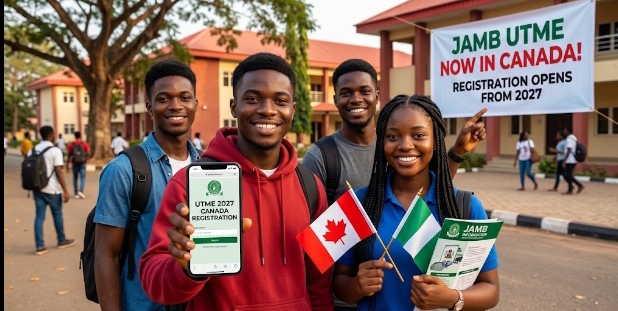
Recently, reports surfaced that the Joint Admissions and Matriculation Board (JAMB) is set to open an examination center in Ottawa, Canada, to handle the registration and testing of prospective candidates wishing to study in Nigeria. Beyond the headlines, it is striking to see the children of Diaspora parents—some of whom once dismissed Nigeria and criticized its institutions—now demonstrating an interest in entering the very academic system their parents departed. This contrast highlights a significant disconnect between sweeping public criticism and practical reality.
Arguably, if there is one sector Nigerians abroad frequently criticize, it is the country’s educational system. Many argue that Nigerian universities cannot compete globally, pointing to outdated curricula and broader societal challenges. Yet this trend raises a fundamental question: if the system is as flawed as portrayed, why are these same families seeking access to it for their children?
This hyper-critical stance toward domestic institutions is not unique to Nigerians residing in Canada. Interestingly, JAMB’s expansion reflects a growing demand from Diaspora communities worldwide who want their children to pursue higher education in Nigeria despite their earlier criticisms.
Currently, JAMB operates international testing centers in several locations, including London (United Kingdom), Jeddah (Saudi Arabia), Johannesburg (South Africa), and Accra (Ghana). The Board also maintains centers in Cotonou (Benin Republic), Banjul (The Gambia), Abidjan (Côte d'Ivoire), Buea (Cameroon), Ouagadougou (Burkina Faso), and Malabo (Equatorial Guinea) to accommodate candidates living across Africa who wish to study in Nigerian tertiary institutions.
Given the persistent criticism directed at the country by some in the Diaspora, the strong advocacy for establishing local admission centers abroad presents a clear paradox. It demonstrates that despite public grievances, these families still see tangible value in the Nigerian university system.
While challenges exist, Nigerian universities continue to produce resilient and capable graduates who excel globally. Although domestic institutions face funding shortages, they offer quality higher education at a fraction of the cost found in many foreign jurisdictions. Students and faculty continuously adapt to these systemic constraints, driving academic and professional progress.
Nigerians living abroad should adopt a more balanced perspective when discussing the nation’s institutions. Whether the choice to send children back home to study is driven by affordable tuition rates or the solid foundational values embedded in the curriculum, the underlying reality remains clear: no nation is without its flaws, and building a better educational system requires constructive engagement from all citizens, regardless of where they reside.
Arguably, if there is one sector Nigerians abroad frequently criticize, it is the country’s educational system. Many argue that Nigerian universities cannot compete globally, pointing to outdated curricula and broader societal challenges. Yet this trend raises a fundamental question: if the system is as flawed as portrayed, why are these same families seeking access to it for their children?
This hyper-critical stance toward domestic institutions is not unique to Nigerians residing in Canada. Interestingly, JAMB’s expansion reflects a growing demand from Diaspora communities worldwide who want their children to pursue higher education in Nigeria despite their earlier criticisms.
Currently, JAMB operates international testing centers in several locations, including London (United Kingdom), Jeddah (Saudi Arabia), Johannesburg (South Africa), and Accra (Ghana). The Board also maintains centers in Cotonou (Benin Republic), Banjul (The Gambia), Abidjan (Côte d'Ivoire), Buea (Cameroon), Ouagadougou (Burkina Faso), and Malabo (Equatorial Guinea) to accommodate candidates living across Africa who wish to study in Nigerian tertiary institutions.
Given the persistent criticism directed at the country by some in the Diaspora, the strong advocacy for establishing local admission centers abroad presents a clear paradox. It demonstrates that despite public grievances, these families still see tangible value in the Nigerian university system.
While challenges exist, Nigerian universities continue to produce resilient and capable graduates who excel globally. Although domestic institutions face funding shortages, they offer quality higher education at a fraction of the cost found in many foreign jurisdictions. Students and faculty continuously adapt to these systemic constraints, driving academic and professional progress.
Nigerians living abroad should adopt a more balanced perspective when discussing the nation’s institutions. Whether the choice to send children back home to study is driven by affordable tuition rates or the solid foundational values embedded in the curriculum, the underlying reality remains clear: no nation is without its flaws, and building a better educational system requires constructive engagement from all citizens, regardless of where they reside.
Discussions (0)
Log in to comment
Or create an account
Disclaimer: Opinion Grid is not responsible for the consequence of any comment you submitted and the system may remove your comment if it violates our policy or infringes on others' rights.
Trending Discussions
From Inbox: US Relocation or N750k New Offer with Conditions and Benefits in Nigeria?
If your purpose for relocating to the US is the usual pursuit of greener pastures, remember the Yoruba adage: what you are traveling to Sokoto to find is right here in your Sokoto pocket
Gen Z Takes To The Streets: From the Developing World to the Developed, the Demands Remain the Same
Driven by a global demand for transparency, accountability, and systemic reform, Generation Z is rewriting the rules of political activism. From developing nations to world superpowers, this article explores how young citizens are taking to the stree...
Portuguese Football Crisis: Now That Ronaldo Has Spoken
Ronaldo emphasized a core principle in his statement: he asked for nothing from Jorge Jesus except the honest truth. He simply did not want to be misled. Even if the truth were blunt, he wanted Jesus to say directly, Ronaldo, you are no longer neede...
One Killer, Too Many Deaths: Unmasking the Secret Cult Surge from Osun to Nigeria
While election season gave cult groups access to weapons, the ongoing violence across Osogbo and beyond is largely fueled by internal cult elections, splinter groups, and personal scores. From Osun to Lagos, Cross River, and Enugu, innocent citizens ...
Ronaldo vs. Portugal: How a Legend Exits, and the Price Portugal May Pay
These are the real, long-term setbacks awaiting the Portuguese national team if they continue to treat their ultimate icon like an outsider who never contributed to their glory. Cristiano Ronaldo
Independence Day: Tinubu and the Expectations of Nigerians
While some argue that President Tinubu's speech fell short of expectations regarding concrete solutions moving forward, it clearly demonstrated that the man at the helm of affairs is not interested
Beyond the Manifesto: What Will Decide the 2027 Nigerian Polls?
A keen examination of the early preparations suggests that non-manifesto factors—rather than policy programs—are becoming the main priority for the leading contenders
Kidnappers Sentenced to Death: The Unspoken Concerns Surrounding Edo Special Court's Ruling
The quote above is part of the landmark judgment delivered on Wednesday, September 24, 2026, by an Edo Special Court—a historic day both for Edo State and for Nigeria’s broader fight against kidnapping
Babachir David Lawal and the Dilemma of Leadership Acceptability: A Case Study in Political Mechanics
Lawal’s political career demonstrates that technical qualification and executive appointments cannot substitute for organic consensus. For political parties preparing for major electoral contests, his trajectory offers a clear lesson: positional auth...
Too Good to Be True: Inside the Osogbo Food Subsidy Scam
While it is easy to blame government policies for driving up the cost of living, citizens must also exercise caution. If these operators were indeed selling stolen goods, wouldn't buying from them make customers accomplices to a crime?